

Wildlife After the Rain Season
This blog is based purely on my own wildlife experience in Etosha National Park. I visited Etosha in April, shortly after a period of heavy rainfall. While this made the landscape incredibly green and beautiful, it also meant that there was a lot of water available throughout the park.
When water is spread everywhere, animals don’t need to gather around specific waterholes. As a result, wildlife can be more difficult to find, and sightings require extra patience. Still, over the course of our safaris — both guided and self-drive — we were lucky enough to see a wide variety of animals, some expected, others more special.
Below are the animals I personally saw and photographed during my time in Etosha.

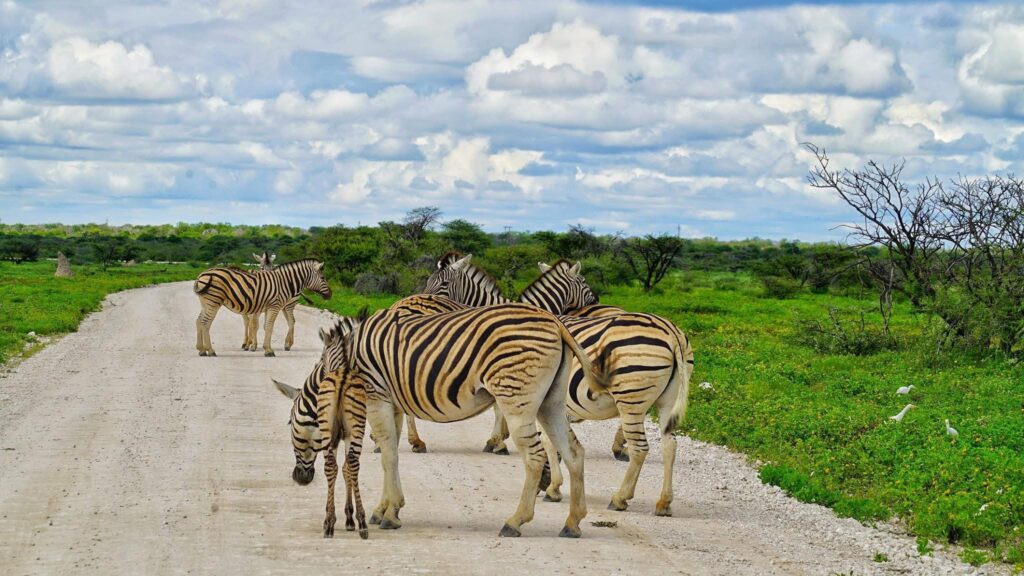
Zebras
Zebras are everywhere in Etosha — and seeing large herds moving together is an unforgettable sight.
They often gather near open areas and water sources, mixing with wildebeest and other grazing animals. Their strong social structure and constant vocal communication make them fascinating to observe. Watching a group of zebras dust-bathe or keep watch for danger is a classic safari moment.
Jackals
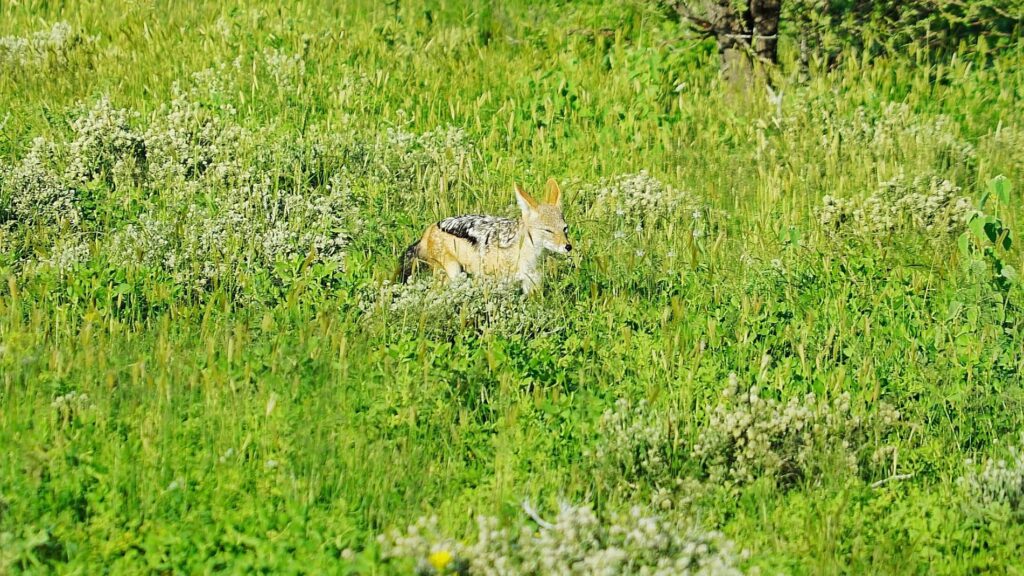
Jackals were surprisingly easy to spot and appeared frequently during our drives.
They are highly adaptable scavengers and hunters, often seen trotting along roadsides or lingering near waterholes. Jackals play an important role in cleaning up leftovers from predator kills and are always alert, curious, and quick to disappear into the bush when disturbed.

Giraffes
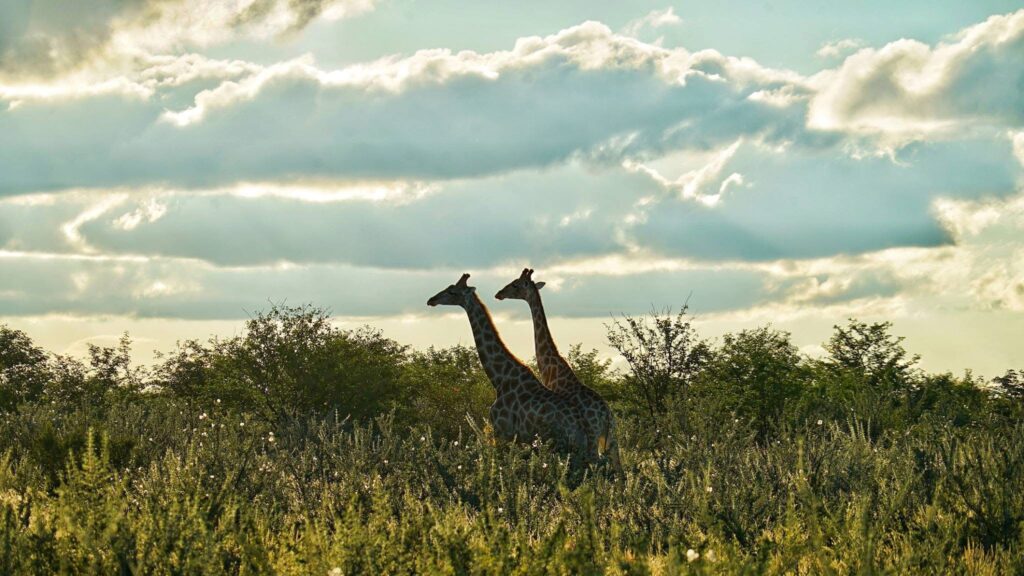
Seeing giraffes in Etosha never gets old.
They move slowly and gracefully, browsing treetops that other animals can’t reach. Giraffes are peaceful giants, often seen in small groups, calmly observing their surroundings. Their height makes them excellent early-warning systems — other animals often rely on them to spot danger from afar.
Elephants
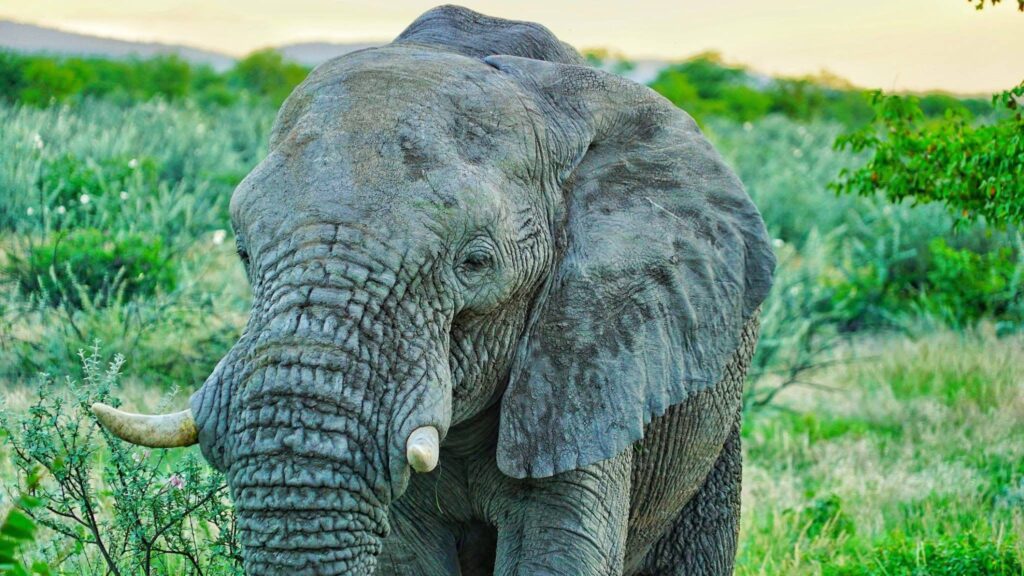
Elephants are one of Etosha’s most impressive animals — and one encounter in particular will stay with me forever.
We encountered a visibly irritated elephant who briefly charged toward our vehicle. It was a powerful reminder that elephants, despite their intelligence and calm nature, demand respect. Seeing them move across the plains or interact with each other shows just how emotional and social these animals are.
Ostriches
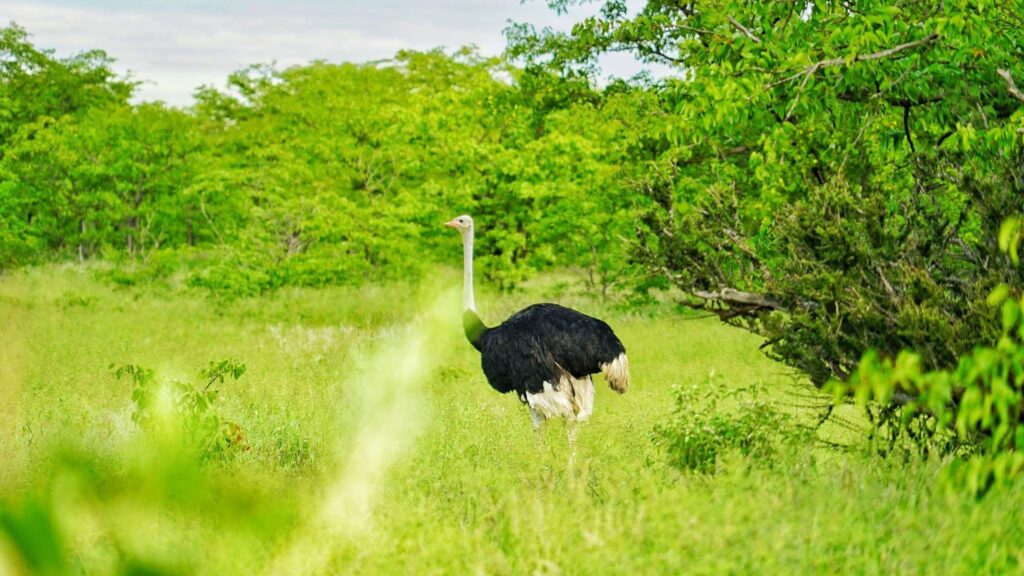
Ostriches were another frequent sight, often standing tall in open areas.
As the world’s largest bird, they are impossible to miss. Their speed, sharp eyesight, and unique movement make them fascinating to watch. Whether walking calmly or suddenly sprinting across the plains, ostriches always draw attention.
Lions
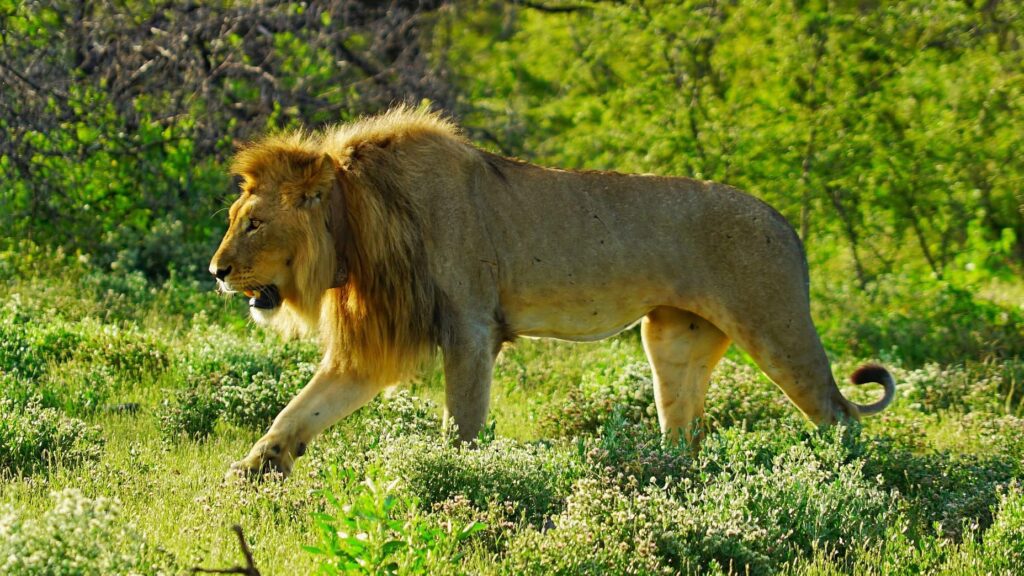
The lion was the animal we searched for the longest — and patience was key.
After hours of scanning the landscape, we finally found a lion resting near the edge of the bushes, almost perfectly camouflaged. He was sleeping, completely unbothered by our presence. The experience perfectly captured the essence of safari: quiet observation, patience, and respect.
In addition, during a night safari, we witnessed two lions that had been fighting. One of them was injured and calling out — a raw and emotional moment that showed the harsh reality of life in the wild.

Wildebeest
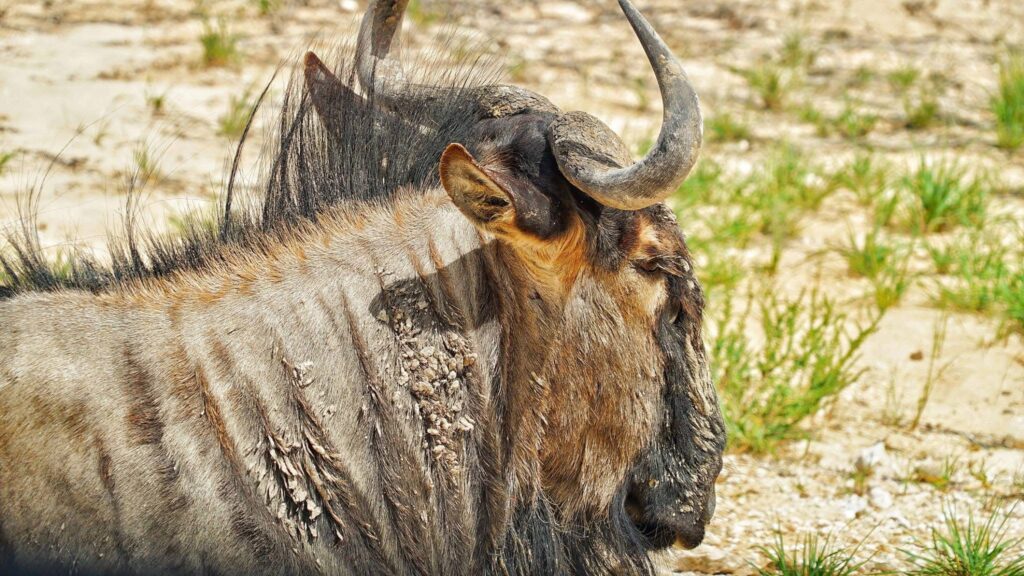
Wildebeest were commonly seen alongside zebras, grazing in open areas.
They move in groups and are constantly alert, ready to react at the slightest sign of danger. Their numbers and movement patterns are a vital part of the ecosystem, helping shape the landscape through grazing.
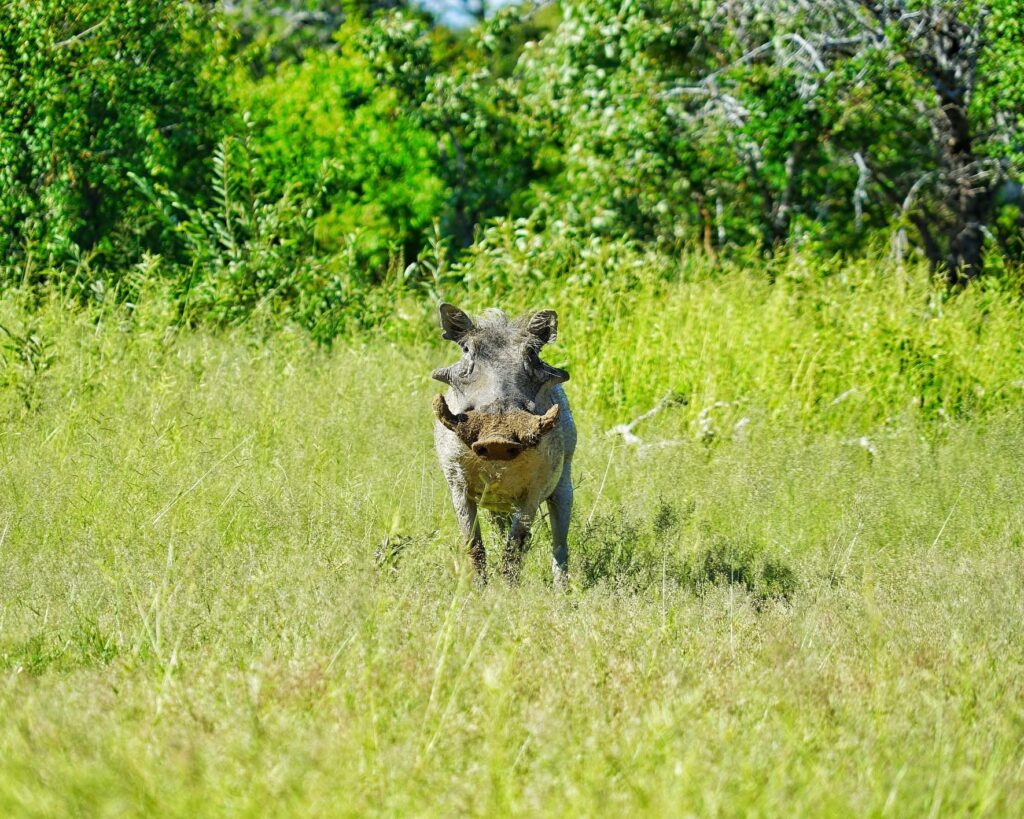
Warthogs
Warthogs were a constant source of entertainment.
Often seen trotting with their tails straight up in the air, they move quickly between grazing spots and burrows. Despite their rough appearance, warthogs are social and playful animals that add a lighter, humorous touch to safari drives.
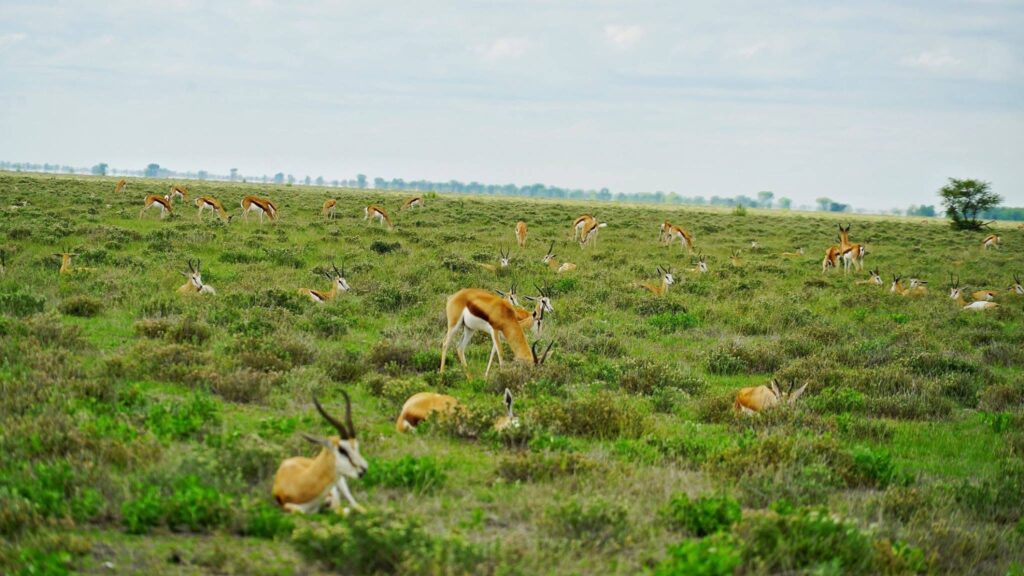
Springbok
Springboks are one of Namibia’s most iconic animals, and seeing them in Etosha feels almost inevitable.
They are elegant, fast, and often seen in small groups across open plains. Springboks are known for their incredible jumping ability, called pronking, where they leap high into the air — a behavior thought to signal strength and alertness to predators. Their presence adds movement and life to Etosha’s wide landscapes.
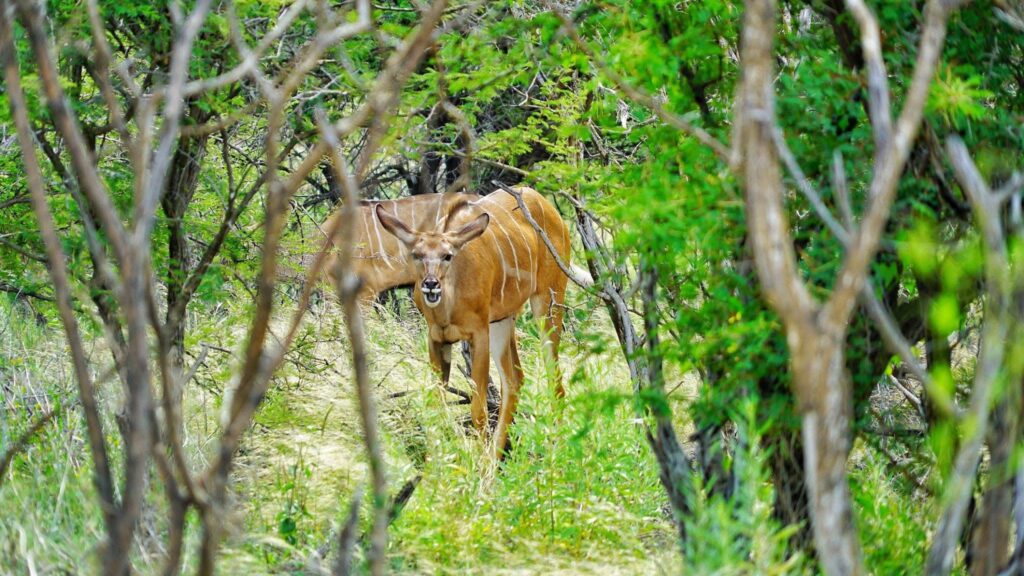
Kudu
Kudus are more elusive than many other animals in Etosha, which makes spotting them extra special.
They are often found near bushy areas rather than wide-open plains. With their large ears and, in the case of males, impressive spiral horns, kudus are striking animals. They move quietly and gracefully, blending into the vegetation, which means you need a sharp eye and a bit of patience to spot them.
Oryx
The Oryx, also known as the Gemsbok, is one of Namibia’s most iconic animals.
With its striking black-and-white facial markings and long, straight horns, the oryx is perfectly adapted to arid environments. Both males and females carry impressive horns, which they use for defense. Oryx are incredibly resilient and can survive extreme heat and long periods without water.

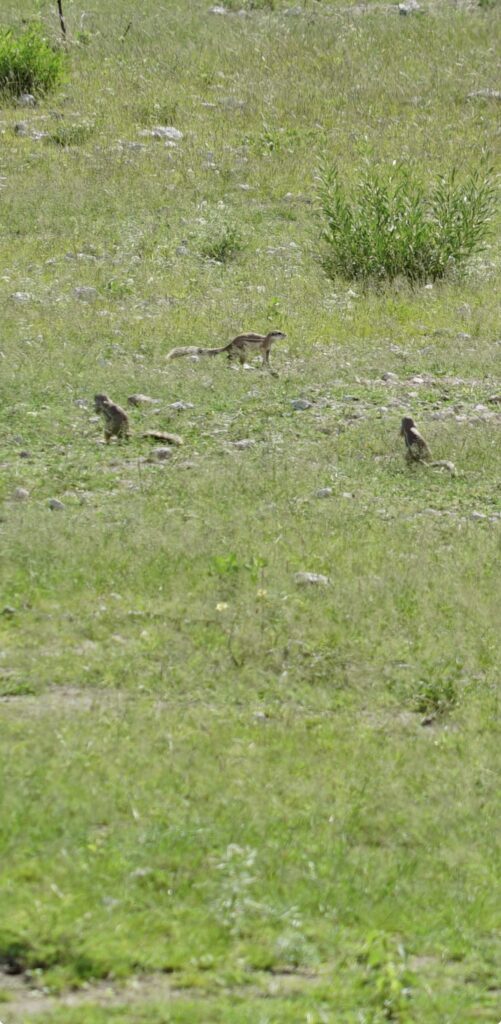
Meerkats
Meerkats are small but incredibly charismatic mammals and one of the most fun sightings in Etosha.
They live in social groups and are often seen standing upright on their hind legs, acting as sentinels while the rest of the group forages. Their constant vigilance and playful behavior make them fascinating to watch — and surprisingly easy to miss if you’re not paying attention.
Red Hartebeest
The Red Hartebeest is a distinctive antelope, easily recognized by its sloping back, long face, and reddish-brown coat.
They are fast, alert animals, often seen in open plains where their speed is their main defense against predators. Red Hartebeests are well adapted to Etosha’s wide landscapes and can cover long distances in search of food.

Secretarybird
The Secretary Bird is one of Africa’s most iconic and unusual birds of prey.
With its long legs and upright posture, it hunts on foot rather than from the air. Secretary Birds are especially famous for hunting snakes, which they kill using powerful kicks. Seeing one calmly walking through tall grass is always a highlight of any safari in Etosha.

Helmeted Guinafowl
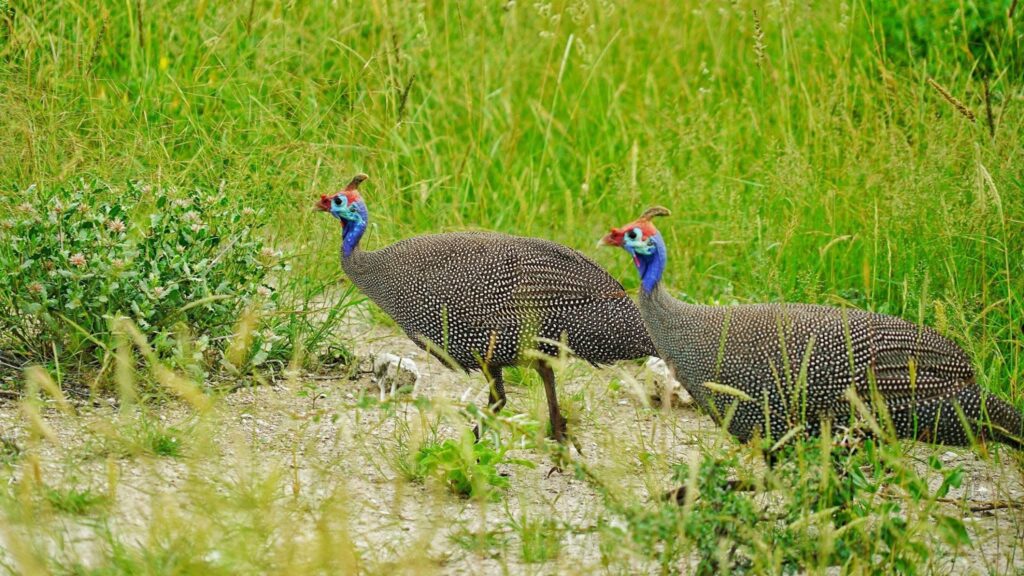
Helmeted Guineafowl are among the most common birds in Etosha and are often seen walking in small groups.
Their dark bodies are covered in white spots, and their blue and red heads are topped with a hard casque, or “helmet.” They are noisy, social birds and play an important role in the ecosystem by feeding on insects and seeds. Their constant movement adds life to the savanna.
Northern Black Korhaan
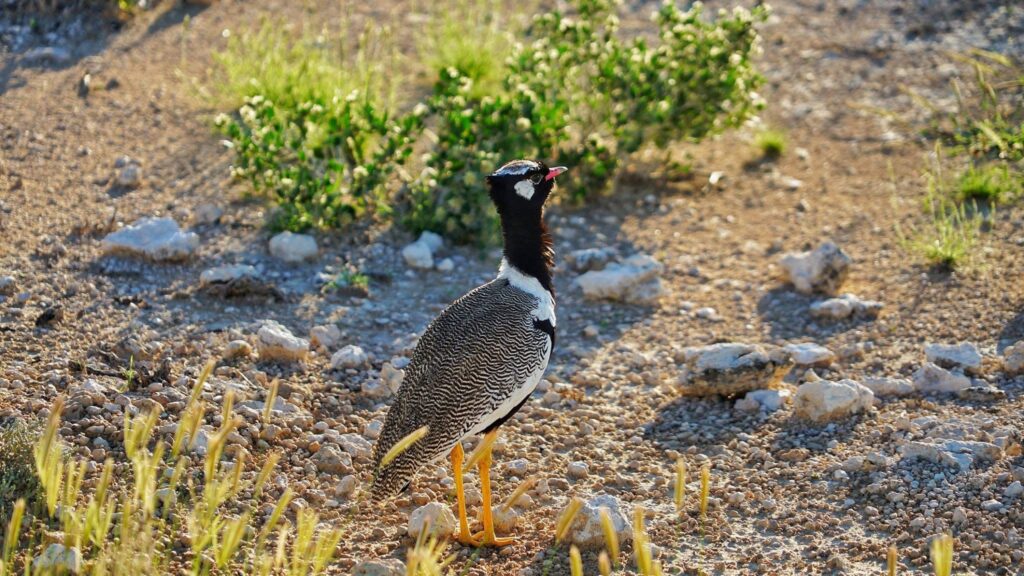
The Northern Black Korhaan is a striking ground-dwelling bird, often overlooked because it prefers walking over flying.
Males are particularly distinctive, with a black head and neck contrasted by a white cheek patch. They are usually seen alone, standing still and scanning their surroundings. Spotting one requires attention — but once seen, they are hard to forget.
Crowned Lapwing
The Crowned Lapwing is a familiar sight in Etosha, especially along roads and open grassy areas.
It is easily recognized by the bold black-and-white markings on its head and its bright red legs and eye-ring. Crowned Lapwings are ground-nesting birds and are known for their loud calls and alert behavior. They often act as early warning systems, reacting quickly to movement around them.

Kori Busthard
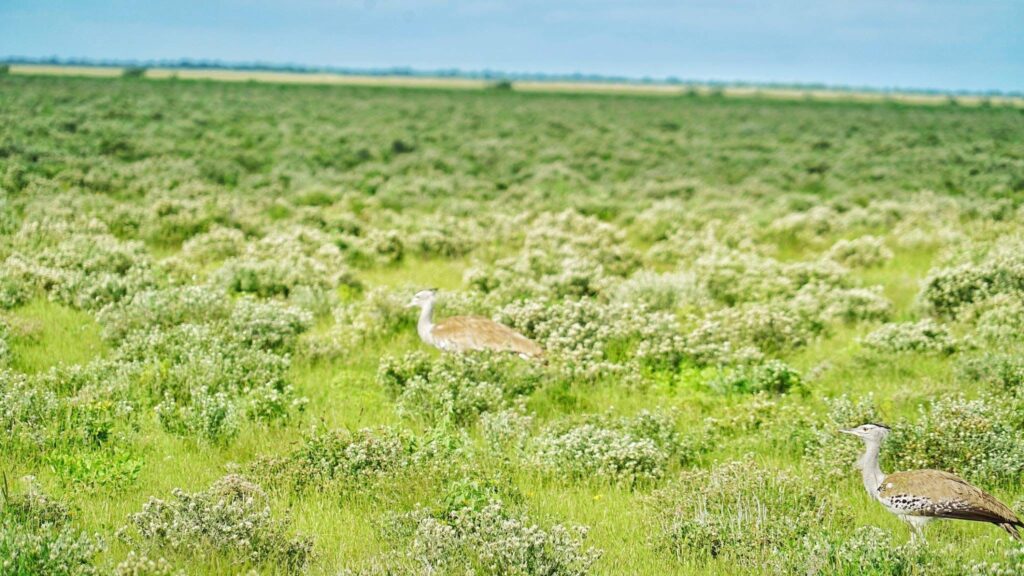
The Kori Bustard is one of the most impressive birds you can encounter in Etosha — and it holds the title of the heaviest flying bird in the world.
Despite its size, it moves slowly and calmly through open grasslands, often walking rather than flying. Kori Bustards are usually seen alone or in pairs, blending surprisingly well into the landscape. Spotting one feels almost prehistoric, as if time has slowed down around it.
Owls (Night Safari)
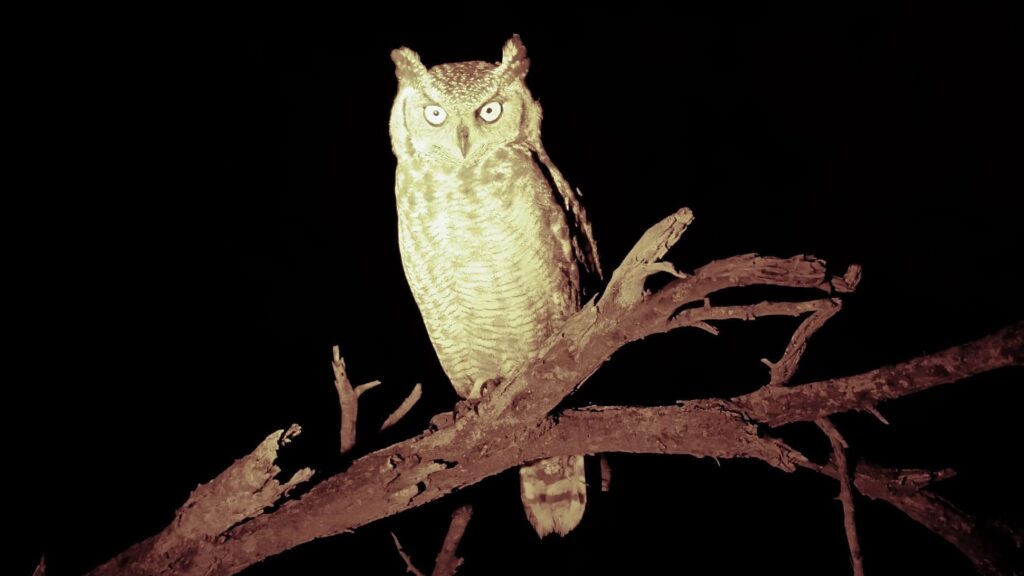
One of the most special sightings happened at night.
During a night safari, we spotted owls, silently watching from tree branches. Seeing nocturnal birds in their natural environment is something completely different from daytime wildlife viewing. Combined with the clear African sky and visible Milky Way, it created an unforgettable atmosphere.
Wildlife in the Green Season
Visiting Etosha shortly after heavy rain made wildlife spotting more challenging, but also more rewarding. Animals were spread out, the landscapes were lush, and every sighting felt earned.
Etosha is not about ticking boxes — it’s about patience, observation, and accepting that nature works on its own terms. And when you do spot wildlife, the experience feels all the more special.